
Frequently Asked Questions
What is a REMS scan — and why does it matter?
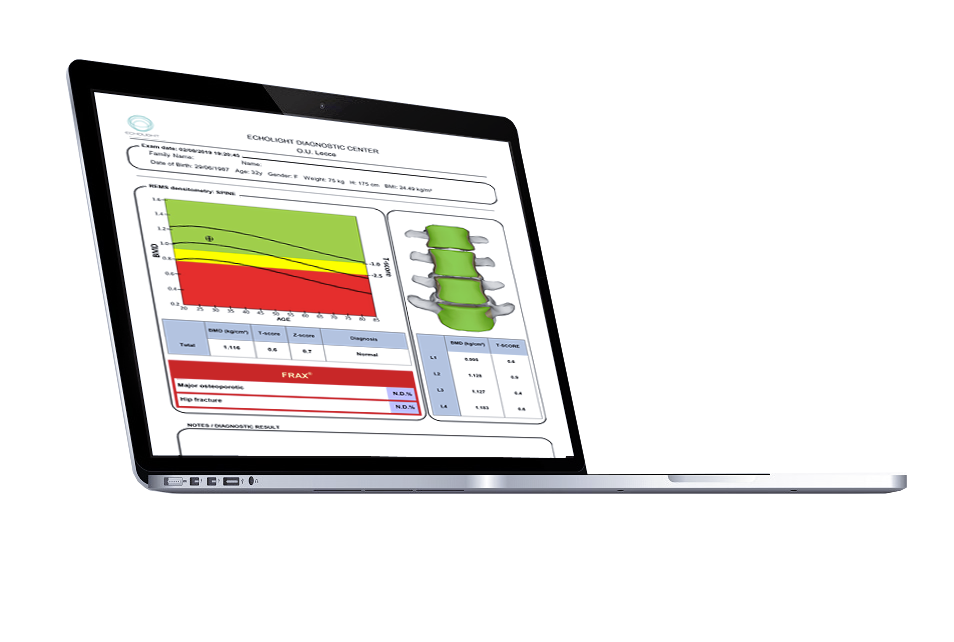
REMS (Radiofrequency Echographic Multi-Spectrometry) is a breakthrough, radiation-free ultrasound technology that evaluates both bone density and bone quality.
Traditional scans primarily measure bone density. REMS goes further by analyzing bone microarchitecture and generating a Fragility Score — offering insight into how strong bones truly are, not just how dense they appear.
Bone health is increasingly recognized as a biomarker of longevity. Bone is metabolically active, hormonally responsive, and deeply connected to whole-body health.
This is about early insight — not late-stage diagnosis.
Do you offer body composition analysis as well?
Yes. In addition to REMS bone assessment, body composition analysis is available.
This provides data on:
• Lean muscle mass
• Fat mass
• Visceral fat
• Distribution patterns
Muscle mass, fat distribution, and bone health are deeply interconnected. Understanding body composition allows for a more comprehensive structural and metabolic assessment.
How is REMS different from a DXA scan?
DXA measures bone density using low-dose radiation.
REMS uses advanced ultrasound technology with no radiation exposure and evaluates both density and bone quality.
Many fractures occur in individuals previously told their bone density was “normal.” Bone strength is more than density alone.
REMS provides a more complete and nuanced assessment of fracture risk — with results available in real time.
What should be expected during the appointment?
Appointments typically last 30 minutes.
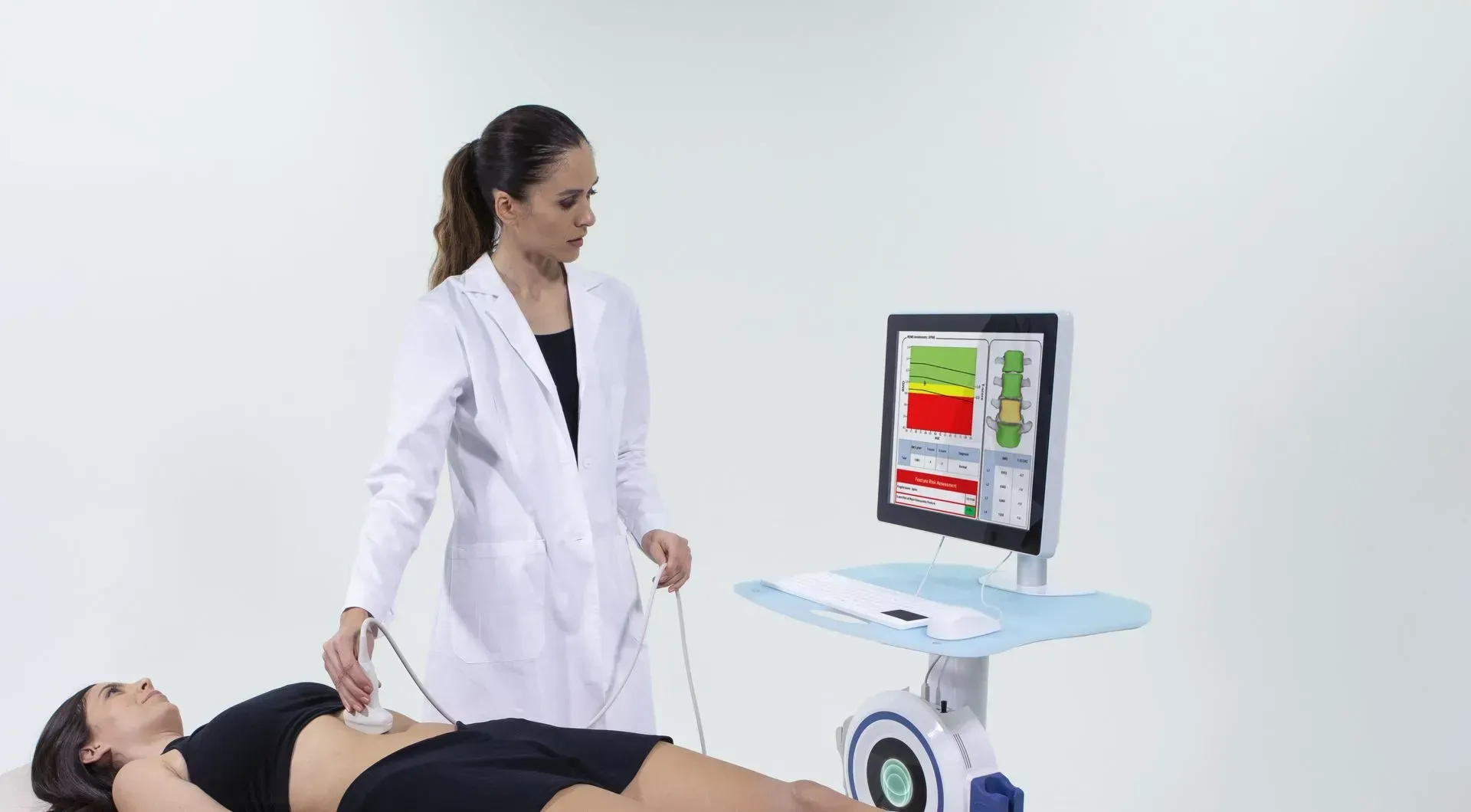
The lumbar spine and hips are scanned while the patient lies comfortably on an exam table. A small amount of ultrasound gel is used. The scan is painless and non-invasive.
If body composition testing is included, that portion is also quick and non-invasive.
Results are available immediately and reviewed in real time during the visit.
When are results available?
Immediately.
A detailed electronic report is provided at the end of the appointment, including:
• T-scores
• Z-scores
• Bone Mineral Density
• Fragility Score
• Body composition metrics (if performed)
Reports may be shared with a physician or healthcare provider.
Should I schedule a consultation before or after my scan?
The scan is completed first.
During the appointment, results are reviewed in real time as they appear on the screen, providing meaningful insight into bone density and bone quality.
For most women, the information provided during the scan offers sufficient clarity and direction, and no additional consultation is necessary.
If a more in-depth discussion would be helpful, a separate consultation can be scheduled. These are typically conducted via Zoom during the week.
What if I’ve had a hip replacement?
If a hip has been replaced, that hip cannot be scanned.
• If only one hip has been replaced, the other hip and the lumbar spine can still be assessed.
• If both hips have been replaced, the lumbar spine can still be scanned.
Even with hip replacements, meaningful bone health information can still be obtained.
Who should consider this type of assessment?
Anyone interested in proactive long-term structural health.
• Women in perimenopause and menopause
• Men over 50
• Individuals with a family history of osteoporosis
• Patients taking bone-impacting medications
• Individuals focused on strength, longevity, and performance
Is fasting required?
Fasting is not required.
However, avoiding a heavy meal within 2–3 hours of the appointment is recommended, as excessive bowel gas may occasionally affect spinal imaging.
What happens after the scan?
Patients leave with:
• Immediate results
• A detailed report
• A clearer understanding of bone density, bone quality, and body composition
• Insight into fracture risk and structural resilience
The mission is to shift bone health from reactive crisis management to proactive longevity strategy.
A New Standard in Early Detection
Traditionally, bone density testing has been limited to individuals over age 65 or those who have already suffered a fracture. But this reactive approach misses the opportunity to identify bone loss before it’s advanced.
Why REMS?
Bone health can decline silently and at any age—due to genetics, hormonal shifts, poor nutrition, inactivity, or underlying medical conditions. Our REMS technology allows for radiation-free, early detection, so you can take proactive steps well before symptoms—or fractures—occur.
Invest in Your Future Self
At OsteoScan USA, we’re not just screening bones—we’re helping people take control of their future. Whether you’re optimizing performance, navigating perimenopause, or simply seeking clarity, your skeletal health deserves attention now—not later.
It’s time to shift the paradigm. Let’s build stronger bones—together.